
Ships in 5 Days
All Product FREE Shipping
Order Sample Booklets
FAQs
Please read our FAQs page to find out more.
What are the core advantages of zebra blinds?
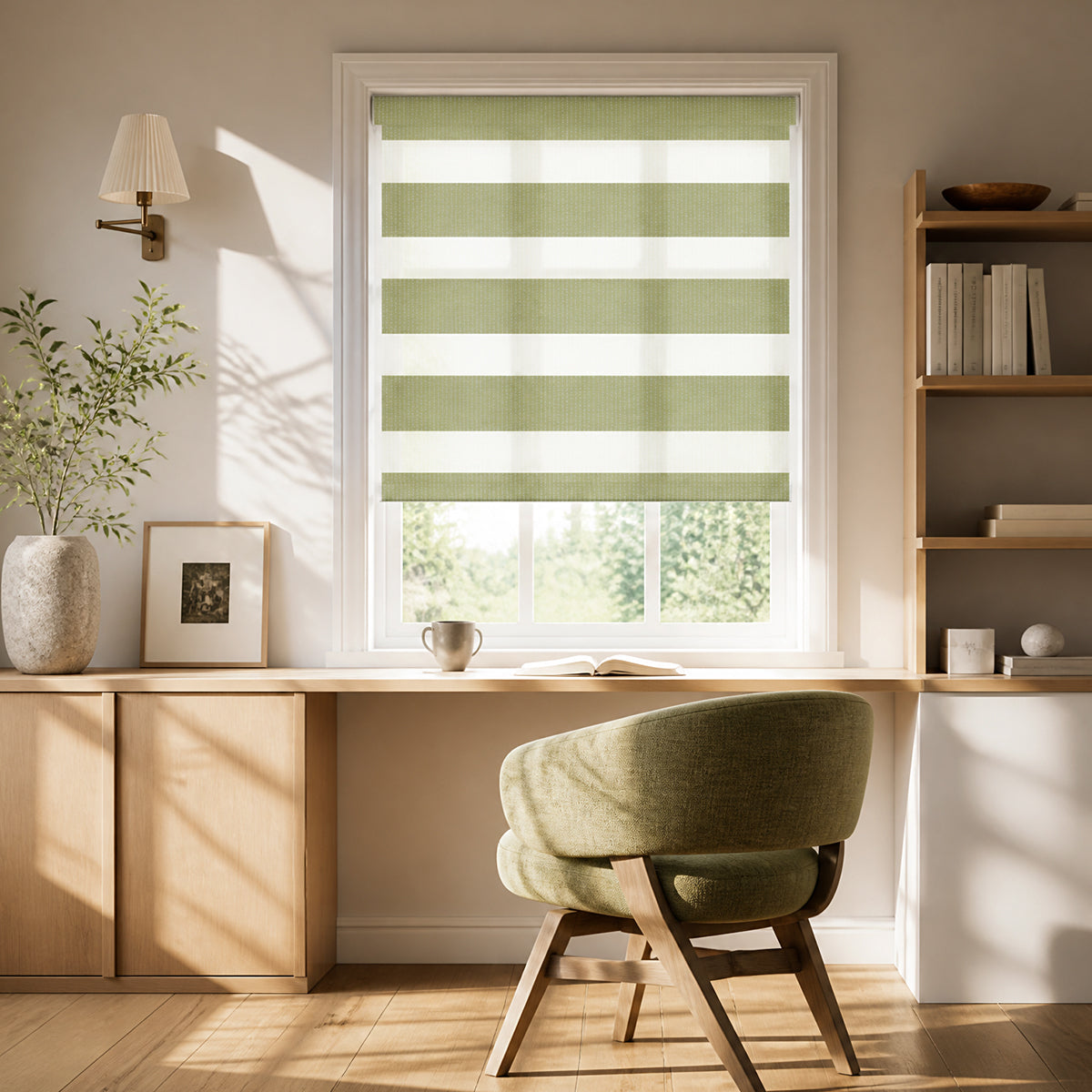
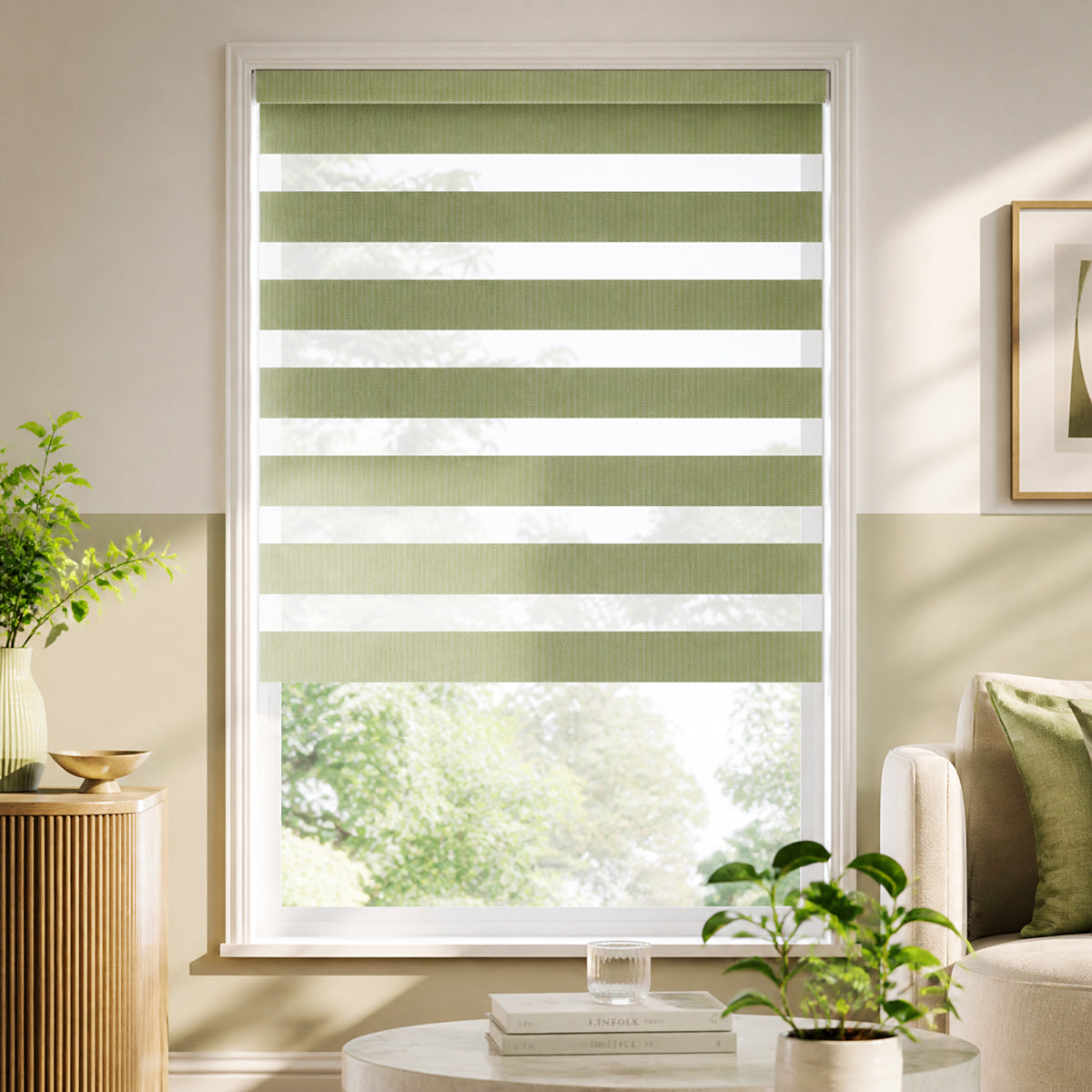
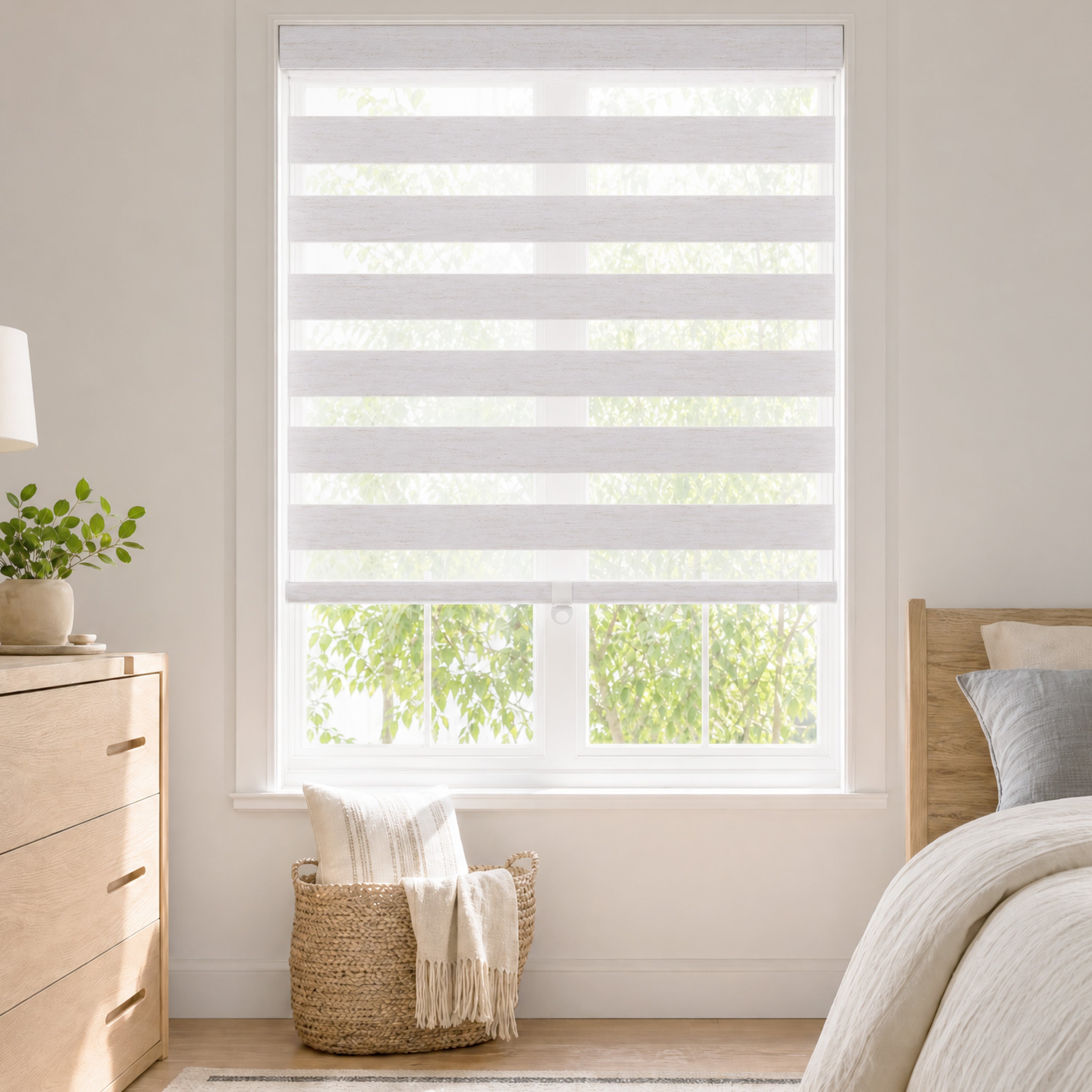
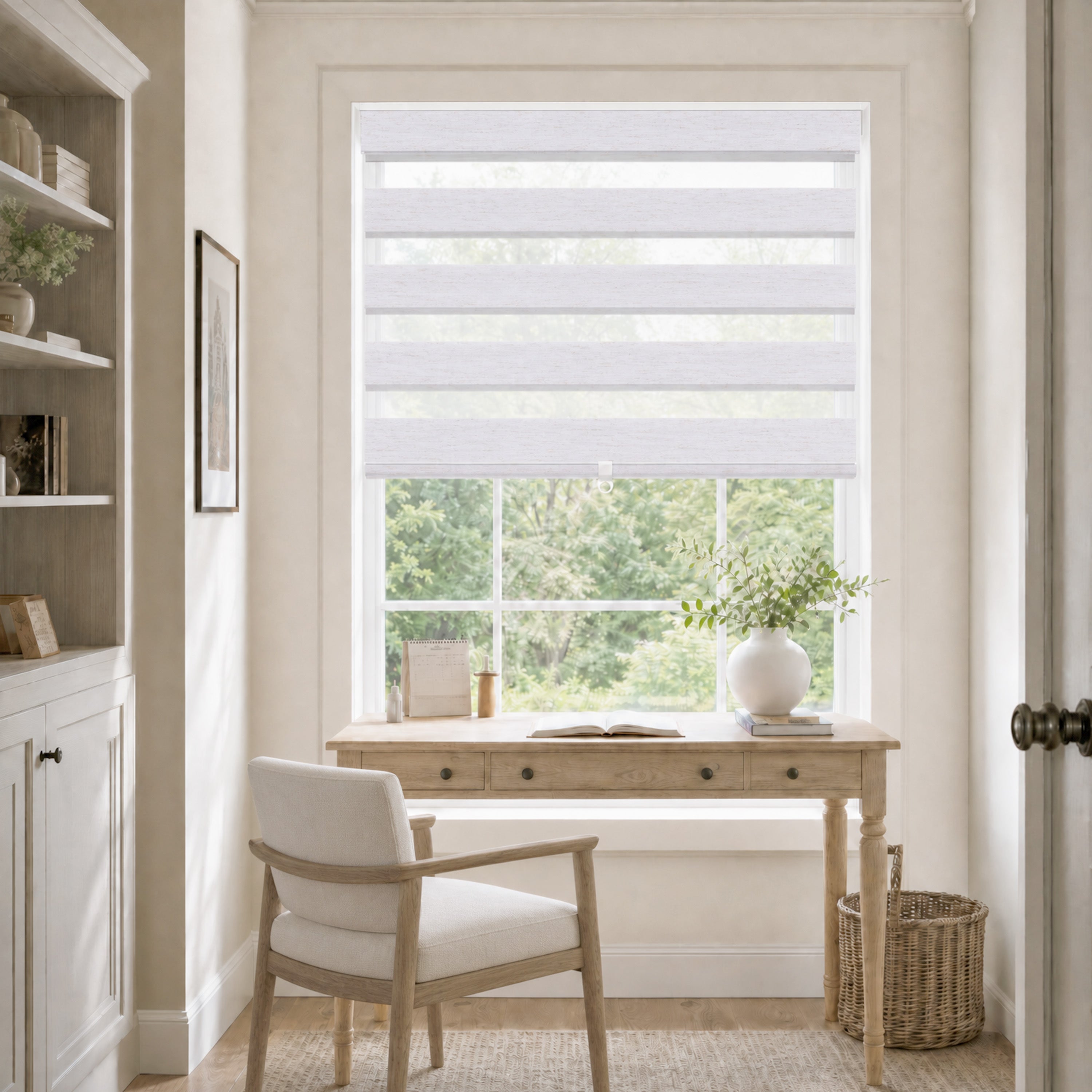
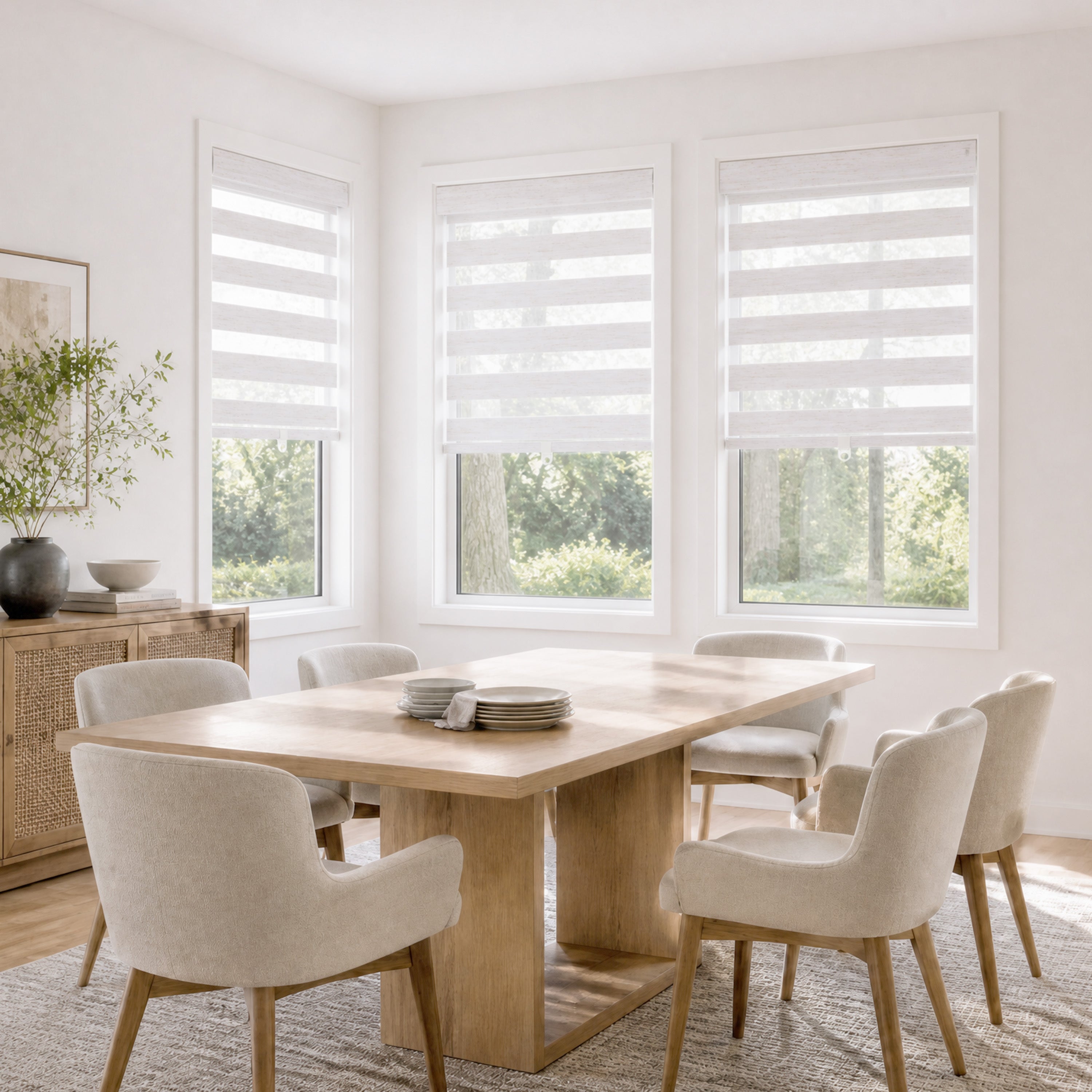
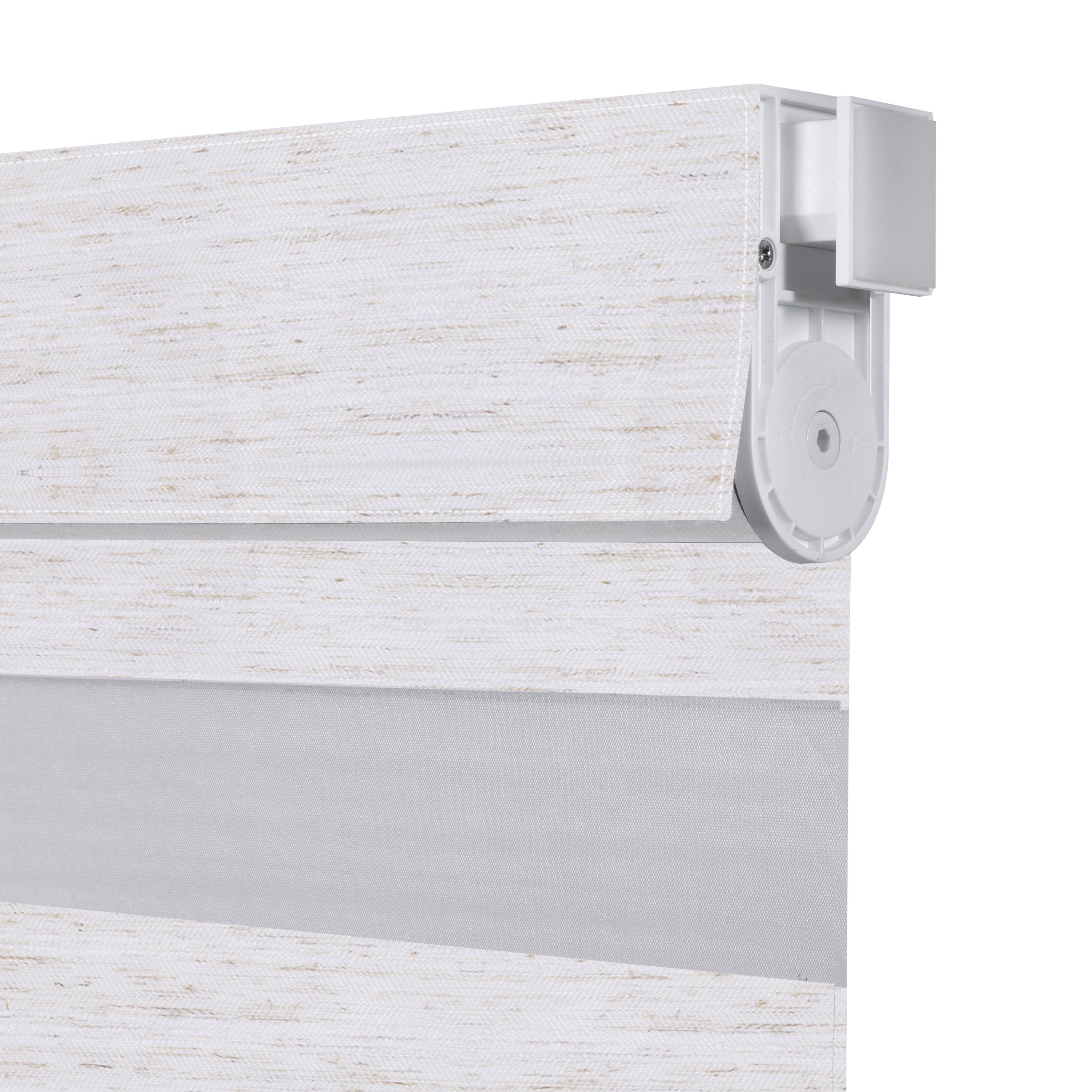
The core advantages are flexible light control and a sleek, minimalist aesthetic. The dual-layer fabric (sheer fabric + blackout strip) allows for adjustable light blockage, balancing privacy and natural light. When rolled up, they take up minimal space and complement modern, minimalist interior designs.
What are the differences between zebra blinds, standard roller shades, and honeycomb shades?
Zebra blinds offer precise light control (seamlessly transitioning from full transparency to complete blockout) and roll up into a slimmer profile. Standard roller shades only fully raise or lower—they cannot be partially open or closed. Honeycomb shades prioritize soundproofing and insulation, but their light-adjusting flexibility falls short compared to zebra blinds.
What materials are zebra blinds made of? Which is more durable?
The mainstream materials are polyester fiber (polyester), polyester-coated, and polyester blends. Polyester-coated options offer superior light-blocking properties and sturdiness, with enhanced abrasion resistance and UV protection, resulting in a longer lifespan. They are the top choice for home use.
Is it safe to install zebra blinds in a child's room? What safety features are included?
Yes, it is safe. We recommend choosing cordless designs to eliminate the risk of children accidentally getting tangled in traditional pull cords. Some models also feature anti-drop mechanisms that ensure slow descent in case of accidental detachment. Additionally, the fabric is free from irritating odors and meets eco-friendly standards for children's rooms.
Can I install zebra blinds myself? What tools do I need?
Absolutely! The simple design and included installation guide make it possible for 99% of households to complete the job independently. You'll need a screwdriver, pencil, tape measure, and electric drill. Follow these steps: Measure and mark positions → Drill holes and insert expansion bolts → Secure mounting brackets → Snap into the window box. The installation process is essentially the same for both inside-mount and outside-mount configurations.