



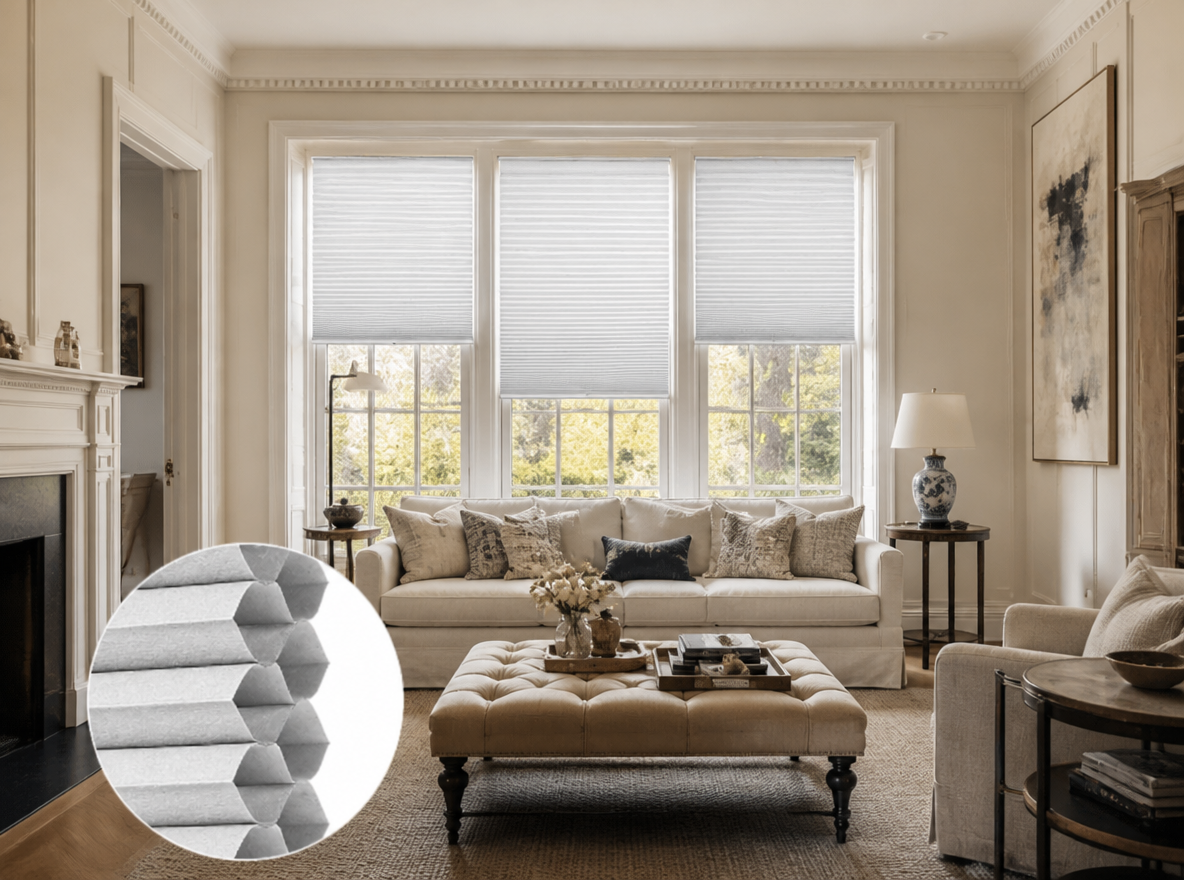
Double cell honeycomb shades are designed for homeowners who want more than basic window coverage. With a dual-layer cellular structure, these energy-efficient window shades create insulating air pockets that help reduce heat transfer, improve indoor comfort, and provide flexible light control throughout the year.
Unlike ordinary window blinds that primarily cover the glass, custom double cell cellular shades combine a structured honeycomb design with functional fabric options. They can help keep rooms more comfortable during hot summers and cold winters while offering the privacy and light control needed in bedrooms, living rooms, and home offices.
But are double cell honeycomb shades actually worth choosing over traditional single-cell designs? And does a double-layer structure automatically mean better performance for every window?
In this guide, we'll explain how double cell cellular shades work, where their insulating benefits matter most, how to choose the right fabric and operating style, and what to check before ordering custom window shades.
Explore SULUGOOD Custom Double Cell Honeycomb Cellular Shades →

1. What Are Double Cell Honeycomb Shades?
Double cell honeycomb shades, also called double cell cellular blinds, feature a layered cellular construction designed to create insulating air spaces between the window and your indoor environment.
When viewed from the side, the fabric forms a series of connected honeycomb-shaped pockets. These air pockets act as an additional insulating barrier, helping slow down the movement of heat through the window area.
This is particularly useful because windows are often one of the areas where indoor temperatures are most affected by outdoor weather conditions.
How Does the Double Cell Structure Work?
The principle is relatively simple: trapped air helps reduce heat transfer. The cellular pockets create spaces that limit direct movement of air between the window surface and the room.
- During winter: The insulating air spaces help reduce heat loss through the window area, supporting a warmer indoor environment.
- During summer: The cellular structure helps reduce heat entering the room, especially when shades are lowered during periods of strong sunlight.
- Throughout the year: The additional insulating layer contributes to more consistent indoor comfort.
However, window insulation depends on more than the shade itself. Window glazing, frame condition, air leakage, installation quality, and fabric specifications all influence overall performance. Cellular shades are an additional insulation solution, not a replacement for properly insulated windows.
2. Double Cell vs. Single Cell Cellular Shades: What's the Difference?
One of the most common questions when shopping for energy-efficient cellular shades is whether double cell construction is worth the additional investment.
The main difference is the cellular construction. Double cell shades use a more layered honeycomb arrangement, while single cell shades use one cellular layer. This difference affects the amount of insulating air space and the overall structure of the shade.
| Comparison | Single Cell Shades | Double Cell Shades |
|---|---|---|
| Cellular Structure | One layer of honeycomb cells | Two layers of honeycomb cells |
| Insulation Design | Creates an insulating air barrier | Provides a more layered insulating structure |
| Window Coverage | Suitable for everyday window coverage | Suitable for shoppers prioritizing additional insulation |
| Light Control | Depends on selected fabric | Depends on selected fabric |
| Privacy | Depends on selected fabric | Depends on selected fabric |
| Best For | General everyday use | Windows where insulation is a higher priority |
Important buying insight: Double cell does not automatically mean twice the insulation or twice the energy savings. Actual thermal performance depends on fabric construction, cellular dimensions, window conditions, and installation. Look for independently tested thermal performance data if you need to compare exact insulation ratings.
When Should You Choose Double Cell Shades?
Double cell honeycomb shades are worth considering if:
- Your windows feel noticeably cold during winter.
- Your room becomes uncomfortably warm from direct sunlight.
- You want an additional insulating layer without replacing your existing windows.
- You are furnishing a bedroom, living room, or home office where indoor comfort matters.
- You prefer a clean, structured window covering with customizable light control.
If your main priority is simply basic privacy or decorative window coverage, a standard cellular shade may already meet your needs. The best choice depends on your room conditions and priorities.

3. Light Filtering or Blackout: Which Fabric Should You Choose?
Choosing the right fabric is just as important as choosing the cellular structure. Two double cell honeycomb shades can have very different everyday performance depending on whether you select light-filtering or blackout fabric.
Light-Filtering Double Cell Shades
Light-filtering cellular shades soften incoming sunlight instead of completely blocking it. They allow natural daylight to enter while helping reduce harsh glare and maintain indoor privacy.
They are especially suitable for:
- Living rooms: Maintain a bright, comfortable atmosphere without excessive direct sunlight.
- Kitchens: Let natural daylight into the space while softening strong window glare.
- Home offices: Help create a more comfortable lighting environment during daytime work.
- Dining areas: Preserve natural light and create a softer indoor atmosphere.
Blackout Double Cell Shades
Blackout cellular shades are designed for stronger light control. Their fabric helps block incoming sunlight and creates a darker, more private indoor environment.
They are particularly useful for:
- Bedrooms: Reduce unwanted daylight for a more restful sleeping environment.
- Nurseries: Create a darker space for daytime naps.
- Media rooms: Reduce incoming light and improve the viewing environment.
- Street-facing windows: Provide greater privacy when the shades are fully lowered.
Keep in mind that blackout fabric does not necessarily eliminate every trace of light around a window. Small gaps around the shade, installation conditions, and mounting style can affect the final result.
Our recommendation: Choose light-filtering fabric when natural daylight is important. Choose blackout fabric when darkness and stronger light control are your priorities.
4. More Than Insulation: Choosing the Right Operating Style
Modern custom double cell cellular shades are not limited to one lifting mechanism. Your operating style affects how you interact with the window every day, so it is worth considering before placing a custom order.
Standard Cordless Shades
Cordless cellular shades offer a clean appearance without dangling operating cords. Simply raise or lower the shade manually to adjust the amount of incoming light.
This design is a practical option for everyday use and helps eliminate common cord-entanglement hazards associated with traditional corded window coverings.
Top-Down Bottom-Up Cellular Shades
Top-down bottom-up shades allow independent adjustment from both the top and bottom of the window.
For example, you can lower the top portion to let daylight enter while keeping the bottom covered to maintain privacy from neighbors or people passing outside.
This is particularly useful for:
- Street-facing living room windows.
- Ground-floor bedrooms.
- Bathrooms with suitable window conditions.
- Rooms where you want natural light without exposing the entire window.
Day & Night Cellular Shades
Day and night operating styles offer greater flexibility for changing light conditions throughout the day. They are worth considering if your lighting preferences change frequently between daytime activities and nighttime privacy.
Motorized Cellular Shades
Motorized double cell shades provide convenient operation without manually raising and lowering the window covering.
They can be especially practical for larger windows, frequently used windows, or rooms where convenient shade adjustment is a priority.
Before choosing motorization, consider power access, installation requirements, and the operating system available for your selected configuration.

5. No-Drill or Drill-Required Installation: Which Is Better?
Installation is another important consideration when choosing custom cellular window shades. SULUGOOD offers both cordless no-drill and drill-required configurations for its double cell cellular shade range.
No-Drill Cellular Shades
No-drill shades are designed for customers who prefer a simpler installation approach without drilling into their walls or window frames.
They can be a convenient option for renters, apartments, and homeowners who want to avoid unnecessary installation damage.
However, no-drill installation should not be assumed to fit every window. Always confirm the available installation method, mounting surface compatibility, and required dimensions before ordering.
Drill-Required Cellular Shades
Drill-required installation uses mounting hardware secured to the installation surface. This option is suitable for customers who prefer a conventional fixed mounting method.
It is important to check the mounting location, available clearance, and installation instructions to ensure that the selected configuration fits properly.
Inside Mount vs. Outside Mount
| Mounting Style | How It Works | Best For |
|---|---|---|
| Inside Mount | Installs within the window frame. | A neat, built-in appearance that showcases the window trim. |
| Outside Mount | Installs outside or above the window frame. | Windows with insufficient interior depth or customers who prefer greater frame coverage. |
For SULUGOOD Custom Double Cell Honeycomb Shades, the minimum installation depth is 2 inches. If your window frame does not provide sufficient depth, consider whether an outside mount is more suitable.
6. What to Check Before Ordering Custom Double Cell Shades
Custom window shades are made according to the dimensions and configuration you provide. A good-looking shade is only part of the equation; accurate measurements and the correct mounting choice are essential for a satisfactory result.
Product Specifications at a Glance
| Specification | SULUGOOD Double Cell Cellular Shades |
|---|---|
| Product Type | Custom Double Cell Honeycomb Shades |
| Available Width | 14–118 inches (35–300 cm) |
| Maximum Height | 98 inches (250 cm) |
| Minimum Installation Depth | 2 inches |
| Mounting Options | Inside Mount / Outside Mount |
| Fabric Options | Light Filtering / Room Darkening or Blackout |
| Operating Styles | Standard / Top-Down Bottom-Up / Day & Night |
| Lift Options | Cordless Manual / Motorized |
| Installation Options | No-Drill / Drill-Required |
| Warranty | 1-Year Limited Warranty |
Three Measurement Details That Matter
1. Measure the window width carefully.
For inside mounts, measure the width at multiple points across the window frame. Windows are not always perfectly square, and the narrowest measurement is important when following the manufacturer's measuring instructions.
2. Check the available installation depth.
Do not measure only the visible window opening. Check whether the frame provides enough usable depth for the shade and its mounting hardware. This product requires at least 2 inches of installation depth.
3. Decide on the mounting style before ordering.
Inside and outside mounts use different measuring approaches. Do not apply inside-mount measurements to an outside-mount order. Follow the product's specific measuring instructions to avoid sizing errors.
For custom-made shades, accurate measurements are especially important because the product is manufactured according to your submitted specifications.

7. Which Rooms Benefit Most from Double Cell Honeycomb Shades?
Although double cell cellular shades can be used throughout the home, certain rooms may benefit more from their combination of insulation and light control.
Bedrooms: Better Light and Temperature Control
Bedrooms often need a combination of privacy, reduced daylight, and comfortable indoor temperatures. Blackout double cell shades are a practical option for people who prefer a darker sleeping environment.
Living Rooms: Comfortable Daytime Lighting
Large living room windows can allow substantial sunlight into the space. Light-filtering double cell shades help soften incoming light while maintaining a welcoming atmosphere.
Home Offices: Less Harsh Window Glare
Direct sunlight can make working near windows uncomfortable. Light-filtering shades can help diffuse sunlight and create a more balanced environment for reading, working, and using screens.
Nurseries: Cordless Convenience and Privacy
Cordless operation removes dangling lift cords, making it a useful feature for homes with children. Pairing cordless operation with blackout fabric can also help create a darker room for naps.
8. Why Choose SULUGOOD Custom Double Cell Honeycomb Shades?
Finding the right window covering means balancing insulation, light control, installation requirements, and everyday convenience.
SULUGOOD Custom Double Cell Honeycomb Shades bring these considerations together through customizable configurations designed for different window sizes and household needs.
- Custom Window Sizing: Available in widths from 14 to 118 inches and heights up to 98 inches.
- Double Cell Construction: A layered honeycomb design creates insulating air spaces to help reduce heat transfer.
- Flexible Light Control: Choose between light-filtering and room-darkening or blackout fabric options.
- Multiple Operating Styles: Select standard, top-down bottom-up, or day and night configurations.
- Convenient Operation: Available in cordless manual and motorized configurations.
- Flexible Installation: Choose no-drill or drill-required installation, with inside and outside mounting options.
- Added Peace of Mind: Includes a one-year limited warranty.
Whether you are updating a bedroom, improving a home office, or adding more comfortable light control to your living room, the right double cell cellular shade configuration can make your windows work better for your daily routine.
Ready to find the right fit for your windows?
Shop SULUGOOD Custom Double Cell Honeycomb Shades →
Frequently Asked Questions About Double Cell Honeycomb Shades
1. Are double cell honeycomb shades better than single cell shades?
Double cell honeycomb shades feature a more layered cellular construction that creates additional insulating air spaces. They are worth considering when window insulation is a higher priority. However, the actual performance difference depends on the fabric, construction, and window conditions.
2. Do double cell cellular shades help keep a room cooler in summer?
Yes. Their cellular air pockets help reduce heat transfer through the window area. When lowered during periods of strong sunlight, they can contribute to a more comfortable indoor environment. Results vary depending on window orientation, glazing, and fabric selection.
3. Do double cell honeycomb shades keep heat inside during winter?
They can help reduce heat loss through windows by creating an additional insulating air barrier. For better results, select a suitable fabric and ensure the shades are measured and installed correctly.
4. Should I choose light-filtering or blackout double cell shades?
Choose light-filtering fabric if you want softened natural daylight while maintaining privacy. Blackout fabric is more suitable for bedrooms, nurseries, and rooms where stronger light control is important.
5. Are double cell honeycomb shades suitable for bedrooms?
Yes. Their insulating structure and flexible fabric options make them suitable for bedrooms. Blackout fabric is a particularly useful choice if you prefer a darker sleeping environment.
6. Can I install double cell cellular shades without drilling?
SULUGOOD offers a cordless no-drill configuration as well as drill-required configurations. Check the selected installation option and window compatibility before placing your order.
7. What is the minimum depth required for SULUGOOD double cell shades?
The minimum installation depth is 2 inches. Check your available window-frame depth before selecting an inside mount. An outside mount may be an alternative if your frame does not provide sufficient clearance.
8. Can I customize the width and height?
Yes. SULUGOOD Custom Double Cell Honeycomb Shades are available in widths from 14 to 118 inches and heights up to 98 inches. Submit your measurements according to the product's measuring instructions.
9. Are cordless cellular shades safer for homes with children and pets?
Cordless shades eliminate dangling lift cords, helping reduce cord-entanglement hazards. They are a practical choice for households with children and pets. Always follow the product's operating and installation instructions.
10. Are double cell honeycomb shades worth the investment?
If your priorities include additional window insulation, flexible light control, and a clean appearance, double cell honeycomb shades are worth considering. The best value comes from selecting a configuration that addresses your actual window conditions rather than paying for features you do not need.
Final Thoughts
The best window shades do more than decorate a window. They help create a comfortable indoor environment while making everyday light and privacy control easier.
Double cell honeycomb shades are a practical option for homeowners looking for a layered cellular design, customizable fabric choices, and flexible operating styles. By considering your room's sunlight exposure, window depth, mounting requirements, and privacy needs, you can select a solution that fits your home more effectively.
Explore the full range of SULUGOOD Cellular Shades or discover the customizable options available in our Custom Double Cell Honeycomb Shades collection.
Share:
SuluGood Child-Safe Cordless Free-Stop Zebra Blinds No-Drill Light-Filtering: Engineering Analysis & Buyer’s Guide
Sulugood Natural Scent Linen No‑Drill Top‑Down Bottom‑Up Roman Shades: In‑Depth Buying Guide